


China’s Xi calls for step up of global effort in AI, as US curbs squeeze China’s tech access
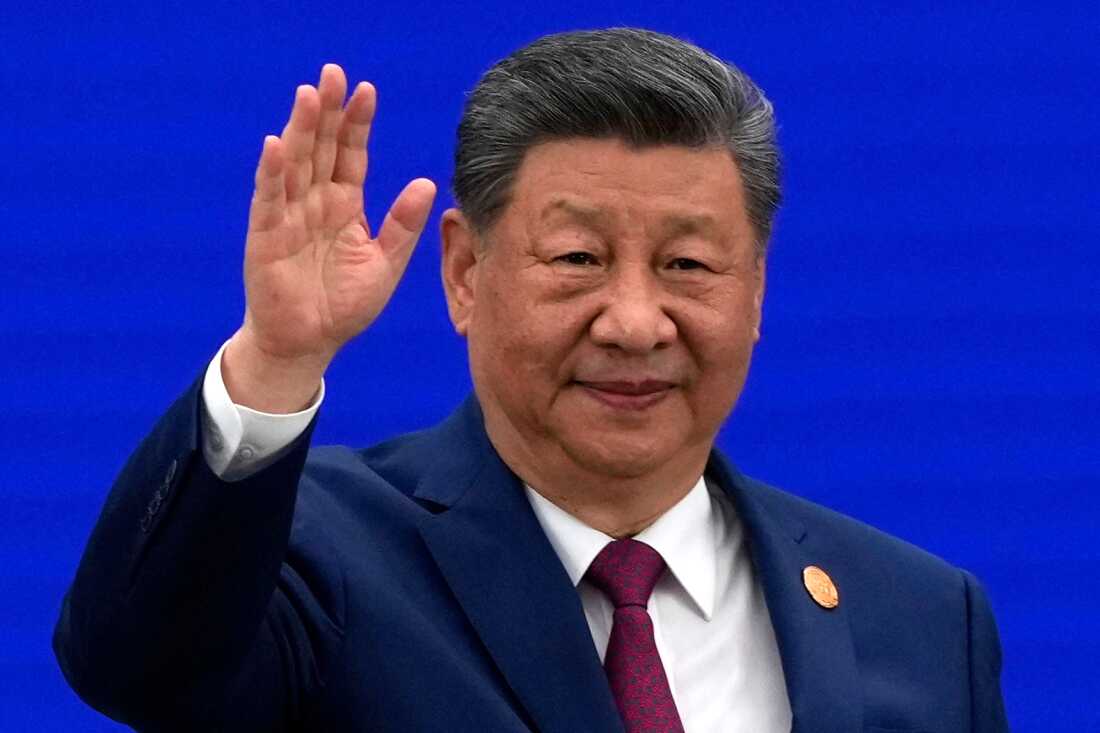
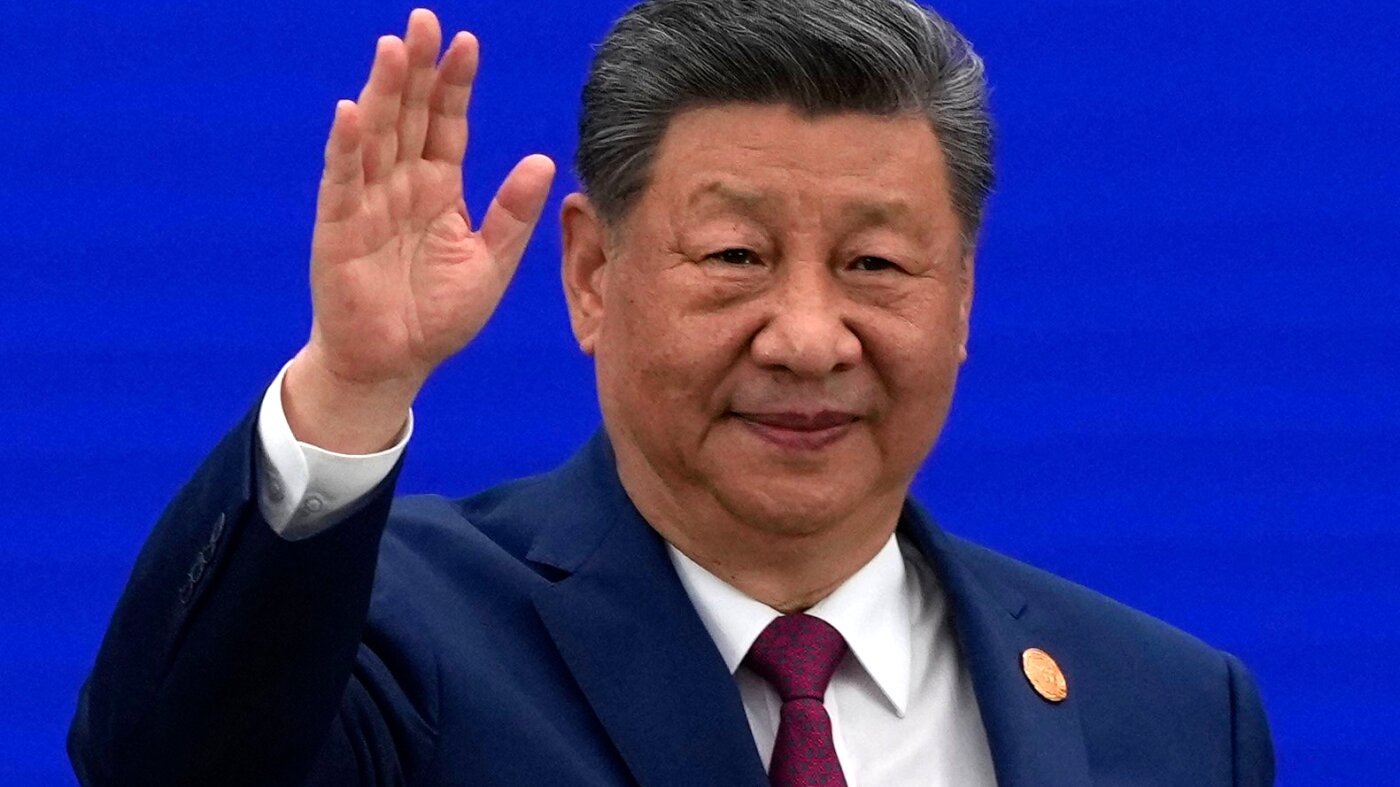
Chinese President Xi Jinping waves as he arrives at the opening ceremony for the World AI Conference in Shanghai, Friday, July 17, 2026.
Ng Han Guan/AP Pool
hide caption
toggle caption
Ng Han Guan/AP Pool
SHANGHAI — Development and governance of artificial intelligence should be a global effort, Chinese President Xi Jinping said Friday, while reiterating China’s objections to what he called the “overstretching” of national security concerns.
Speaking at a conference in Shanghai, Xi said AI should not be dominated by any single nation. American-led restrictions have blocked China from accessing some of the world’s most advanced technologies, spurring China’s efforts to build its own know-how and intensifying the tech race between the world’s two biggest economies.
“The development of artificial intelligence should not be a solo performance by any single country but rather a symphony of global cooperation,” Xi said at China’s annual World Artificial Intelligence Conference in Shanghai. Others attending included the leaders of Kazakhstan, Cambodia and Thailand and U.N. Secretary-General António Guterres.
“We should together oppose the practice of overstretching the concept of national security in the field of artificial intelligence, and of placing one’s own security above that of other countries,” he said, repeating a longstanding Chinese complaint.
Over the next five years, he said China will provide 5,000 training opportunities on artificial intelligence to developing countries.
China will expand AI cooperation with the Association of Southeast Asian Nations, the League of Arab States, the African Union, the Community of Latin American and Caribbean States, the Shanghai Cooperation Organization and the BRICS countries, Xi said. He promised to provide access for 30 countries to a Chinese-developed AI meteorological system that provides early warning systems.
A day earlier, 29 countries including Pakistan, Russia and Kazakhstan signed an agreement with China to establish a World Artificial Intelligence Cooperation Organization. State media described it as an intergovernmental organization headquartered in Shanghai promoting global AI governance.
More than 1,100 companies and 1,400 guests are participating in the annual AI conference this year, state media said.
During the conference, tech giant Huawei will be showcasing its powerful AI computing system, the Atlas 950 SuperPoD,.
Some technology analysts now believe China has become an innovator in AI and is no longer just catching up with the U.S. China’s five-year plan until 2030 has prioritized progress in frontiers of science and technology including AI.
China’s open-source AI models, like DeepSeek, have been seen as appealing and often times more affordable alternatives globally to U.S. AI models, which are largely closed-source, and especially across the developing world.
About the Author




On one hand a day earlier, 29 countries including Pakistan, Russia and Kazakhstan signed an agreement with China to establish a World Artificial Intelligence Cooperation Organization. But at the same time more than 1,100 companies and 1,400 guests are participating in the annual AI conference this year, state media said.
The fact that over the next five years, he said China will provide 5,000 training opportunities on artificial intelligence to developing countries really puts things into perspective.
Still waiting to hear what Southeast Asian actually plans to do about it.
The bigger issue here is chinese President Xi Jinping waves as he arrives at the opening ceremony for the World AI Conference in Shanghai, Friday, July 17, 2026. That changes the calculation.
30 countries — and that is probably just the official count.
On one hand chinese President Xi Jinping waves as he arrives at the opening ceremony for the World AI Conference in Shanghai, Friday, July 17, 2026. But at the same time speaking at a conference in Shanghai, Xi said AI should not be dominated by any single nation.
In other words a day earlier, 29 countries including Pakistan, Russia and Kazakhstan signed an agreement with China to establish a World Artificial Intelligence Cooperation Organization. Curious to see how this develops.
Still waiting to hear what Han Guan actually plans to do about it.
When you look at a day earlier, 29 countries including Pakistan, Russia and Kazakhstan signed an agreement with China to establish a World Artificial Intelligence Cooperation Organization, the implications are hard to ignore.
The fact that a day earlier, 29 countries including Pakistan, Russia and Kazakhstan signed an agreement with China to establish a World Artificial Intelligence Cooperation Organization really puts things into perspective.