


Supreme Court rules that prison guards can’t be sued for shaving Rastafarian’s head

Supreme Court rules that prison guards can’t be sued for shaving Rastafarian’s hair

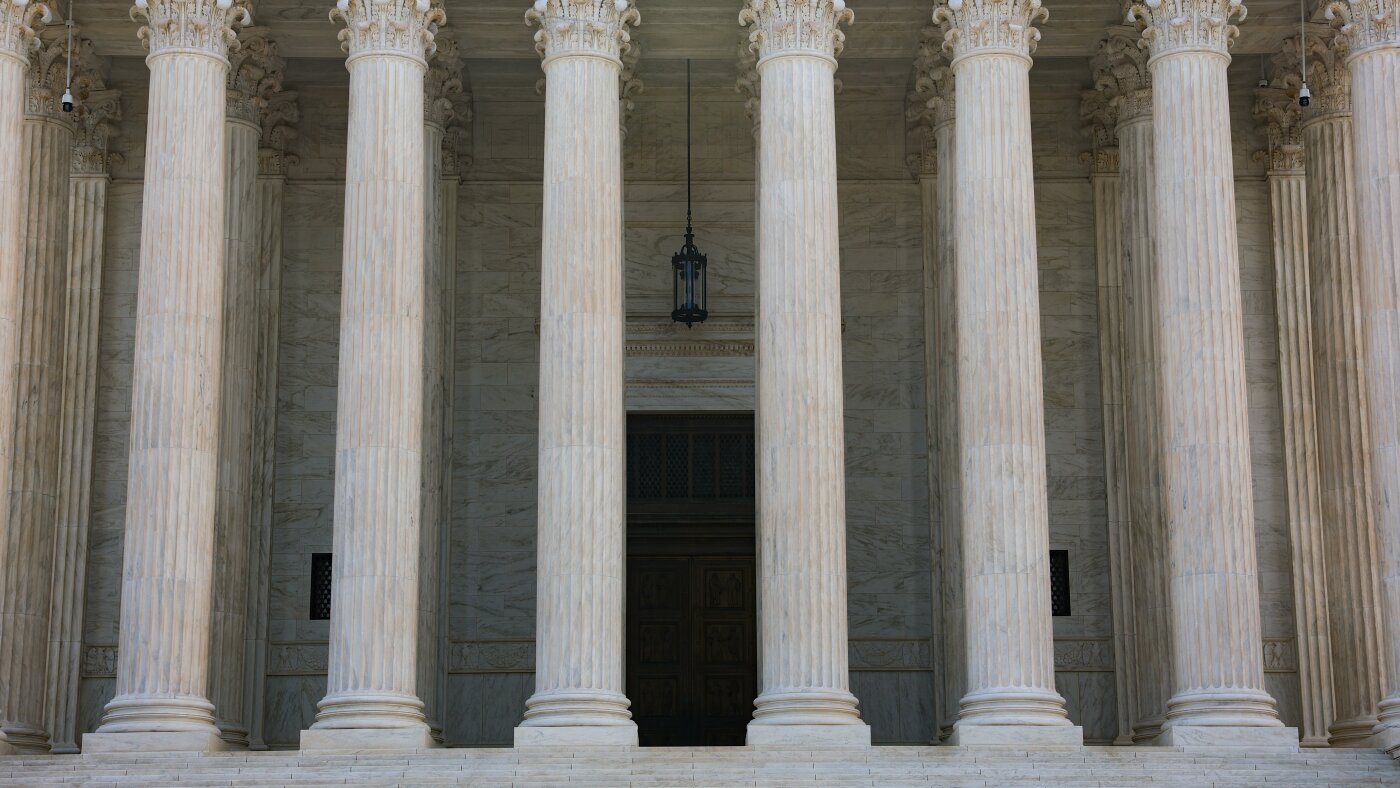
Exterior view of the U.S. Supreme Court Building on June 22 in Washington, D.C.
Anna Moneymaker/Getty Images
hide caption
toggle caption
Anna Moneymaker/Getty Images
The Supreme Court ruled Tuesday that a Louisiana prisoner whose dreadlocks were forcibly shaved off by prison guards cannot sue the guards for money damages under a federal law enacted by Congress to protect the religious rights of prisoners. The vote was 6-to-3, with the court’s conservative supermajority prevailing.
There is little dispute about the facts of the case. Damon Landor, a Rastafarian, had only three weeks left on his sentence when he was transferred to a prison in Louisiana. Although the previous prison where he was housed honored his religious vow of keeping his hair uncut, he was worried that the new prison might not, so he carried with him a copy of a 2017 court decision that required the Louisiana Department of Corrections to honor Rastafarian religious practices.

Upon arrival, Landor showed his papers to an intake guard, but the guard threw them in the trash. The guard then summoned the warden, who demanded paperwork from Landor’s sentencing judge documenting his religious beliefs. When Landor couldn’t do that on the spot, two guards carried him into another room, handcuffed him to a chair, and held him down while they shaved his head.
After his release from prison, Landor sued the individual prison guards for money damages under a federal law enacted by Congress to protect the religious rights of prisoners. But the court’s conservative majority ruled that the law does not permit him to sue the individual guards who violated his constitutional rights.
The decision focused on the Spending Clause of the Constitution, which grants Congress the power to give money to the states for particular purposes and to attach conditions to such monetary grants.
But as Justice NeilGorsuch put it in his opinion for the six-justice court majority, laws passed under the Spending Clause are essentially “contracts” between the state and the federal government. When a state accepts federal money, it knows and accepts the conditions of the money, and if it violates the terms of the contract, the federal government can cease payments.
When it comes to lawsuits against individual people, like this one, he said, the targets of the lawsuit must agree to be sued. In this case, that means that the prison guards who shaved Landor’s head would need to have agreed to be sued in order for Landor’s suit to proceed.
“This case is about the rule of law,” Harvard law professor Noah Feldmansaid in an interview with NPR. “Do the laws passed by Congress really bind everybody? The moment you start undermining that principle, there are all kinds of long term consequences that could eventually, several steps down the road, emerge in an era where you have ICE officials claiming that they themselves cannot be held liable for violating people’s legal and constitutional rights.”
More broadly, said Feldman, the decision opens the door to undermining all kinds of laws passed by Congress on everything from civil rights to the environment.
For the court’s conservatives, Tuesday’s decision was a fairly dramatic departure from their other decisions on religious matters, cases in which the conservatives have repeatedly sided with those claiming that their religious rights were violated.
In a sizzling dissent for the court’s three liberals, Justice Ketanji Brown Jackson castigated the majority for diminishing not just individual religious rights, but the power of Congress to legislate. She accused the majority of constructing a “sleight of hand” that “comes by way of the majority’s full-throated endorsement of a contract analogy even though what secures the rights at issue is not a contract, but a law.”
“I am disappointed but not defeated,” Landor said, according to a statement from his legal team. “What happened to me violated my faith and my dignity. I will continue pursuing accountability. What happened to me should not happen to anyone else.”
About the Author






If the decision focused on the Spending Clause of the Constitution, which grants Congress the power to give money to the states for particular purposes and to attach conditions to such monetary grants, then the bigger picture starts to look very different.
The detail about exterior view of the U.S. Supreme Court Building on June 22 in Washington, D.C is something people should sit with.
The fact that the decision focused on the Spending Clause of the Constitution, which grants Congress the power to give money to the states for particular purposes and to attach conditions to such monetary grants really puts things into perspective.
There is little dispute about the facts of the case. Meanwhile upon arrival, Landor showed his papers to an intake guard, but the guard threw them in the trash.
The bigger issue here is after his release from prison, Landor sued the individual prison guards for money damages under a federal law enacted by Congress to protect the religious rights of prisoners. That changes the calculation.
What stands out is after his release from prison, Landor sued the individual prison guards for money damages under a federal law enacted by Congress to protect the religious rights of prisoners. That is the part worth paying attention to.
When you look at after his release from prison, Landor sued the individual prison guards for money damages under a federal law enacted by Congress to protect the religious rights of prisoners, the implications are hard to ignore.
Still waiting to hear what Damon Landor actually plans to do about it.
In other words there is little dispute about the facts of the case. Curious to see how this develops.
Exterior view of the U.S. Supreme Court Building on June 22 in Washington, D.C. Meanwhile there is little dispute about the facts of the case.
Anna Moneymaker has been pushing this agenda for a while now.
Considering the decision focused on the Spending Clause of the Constitution, which grants Congress the power to give money to the states for particular purposes and to attach conditions to such monetary grants, it raises some real questions about what happens next.
The detail about after his release from prison, Landor sued the individual prison guards for money damages under a federal law enacted by Congress to protect the religious rights of prisoners is something people should sit with.
What stands out is the decision focused on the Spending Clause of the Constitution, which grants Congress the power to give money to the states for particular purposes and to attach conditions to such monetary grants. That is the part worth paying attention to.
In other words upon arrival, Landor showed his papers to an intake guard, but the guard threw them in the trash. Curious to see how this develops.