


The amateur archivists racing to save US history in national parks against Trump administration censorship
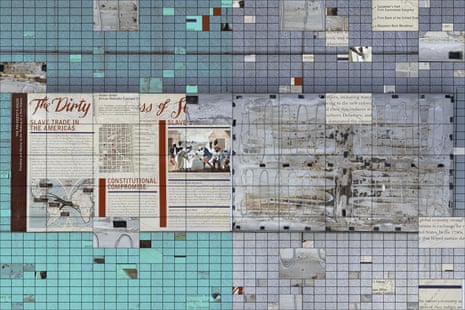
Save Our Signs aims to document every sign in the more than 400 national parks and historic sites across the country before the Trump administration removes them
Jenny McBurney was among hundreds of people around the world who sprang into action last year when the Trump administration started deleting government datasets and webpages because they included information about “gender ideology”, environmental justice or diversity, equity and inclusion.
McBurney, a government publications librarian at the University of Minnesota, joined the Data Rescue Project, a group that mobilizes volunteers to archive critical government datasets that are at risk of deletion by the Trump administration.
While McBurney was working to archive censored datasets last spring, the Trump administration launched a sweeping campaign to censor American history and science in the National Park Service. National Park Service (NPS) rangers were instructed to flag and remove signs about slavery, Indigenous history and the climate crisis at national parks and historic sites around the country if they “inappropriately disparage Americans past or living” or advance a “corrosive ideology”.
McBurney realized that just like government datasets, national park signs also contained public information that was funded by public taxpayer dollars. Why not mobilize people to archive the information at risk of removal on national park signs too?
Last July, McBurney and several colleagues at the University of Minnesota libraries launched Save Our Signs: a crowdsourced project that aims to document every sign in the more than 400 national parks and historic sites across the country before the Trump administration removes them.
“One goal, of course, is to take pictures of the signs before they’re removed so we have a record of them,” McBurney said. “But a second goal is that we want to engage the public and make sure that people know that this is happening and ask them: What do you think about this? Is this okay with you? What do you think our American history story should be?”
Hundreds of volunteers, many of whom are anonymous, have submitted photos of national signage to the digital archive. As of 3 August, the site has compiled 17,236 photos, including at least one in nearly every national park and historic site in the country.
“The number of submissions we’ve gotten really demonstrates how much people do care about this – it’s not just an obscure little problem,” McBurney said.
For many, contributing to Save Our Signs has also become an important outlet for pushing back against the administration.
“In a lot of helpless moments, we look for control and look for something to put our hands into,” said Isabelle Boelter, a library assistant in the government publications department at the University of Minnesota. “Save Our Signs is that opportunity and chance: it allows us to face the history that the administration is trying to remove and disappear, and instead, we’re able to help protect it.”
Charlene Forsythe is one of the group’s most prolific contributors, having submitted more than 2,000 photos. She and her mom Karen Smith have visited 53 parks and historic sites together in the past four years, from Carlsbad Caverns national park in New Mexico all the way to Independence national historic park in Philadelphia.
They got in the habit of snapping photos of national park signs as a way to share what they’ve learned with Forsythe’s grandmother and Smith’s mother, who is 86 and homebound for health reasons.
“She was interested in our travels, and wanted to know where we were going and what we were doing,” said Smith. “It was sort of a way to let her travel without actually traveling.”
When Forsythe learned that the Trump administration was ordering the removal of national park signs, she knew she had to do something about it – so she sent her trove of photos to Save Our Signs.
“It just really irked me,” Forsythe said. “The truth is the truth, and we did bad things in our history as a nation and those things should be acknowledged in our national parks.”
]–>
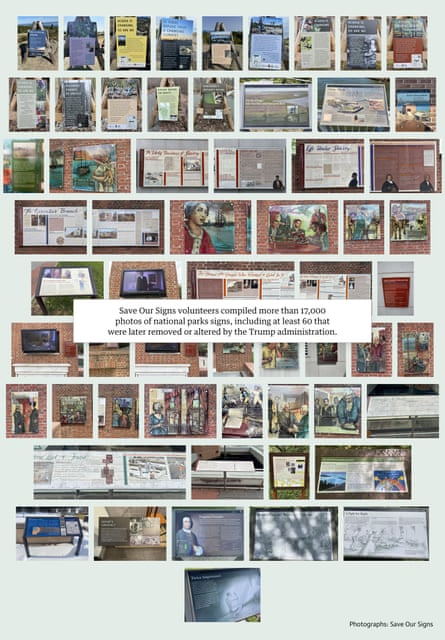
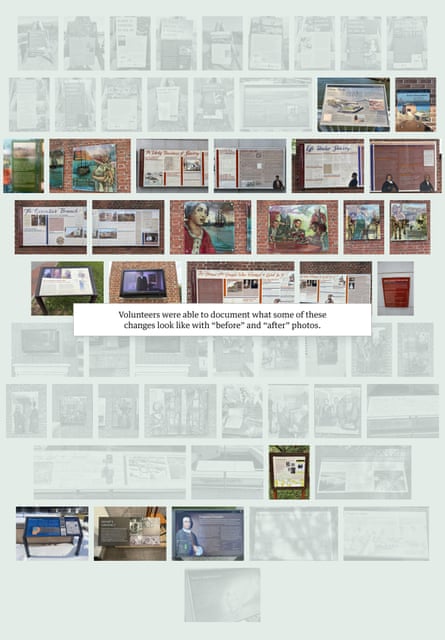
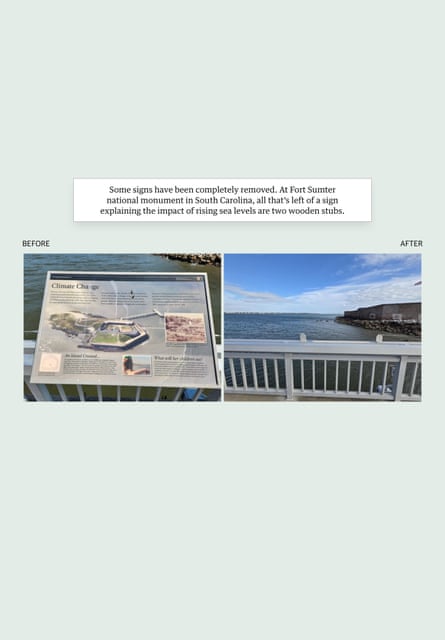
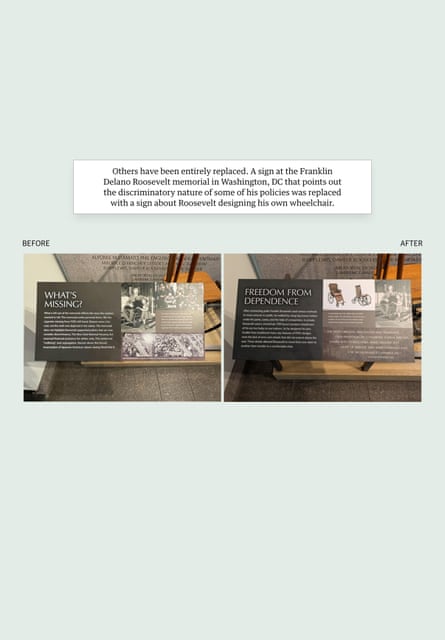
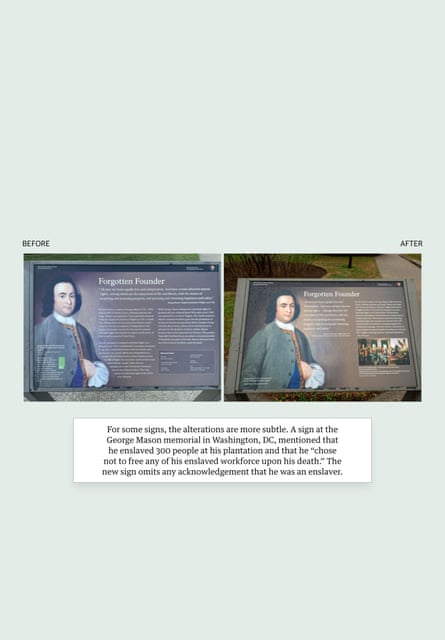
Volunteers with Save Our Signs have documented the “before” photos of signs at several national parks where signs have been confirmed to have been removed or altered, including at Acadia national park, Cape Cod national seashore, Fort Sumter and Fort Moultrie national historic park, Gateway national park, Independence national park, Muir Woods national monument, the National Mall and the Virgin Islands national park.
Every six months, Boelter helps Save Our Signs volunteers review every photo submission to crop out identifying people or images and check for issues like glare that make it hard to read the text in the images.
She’s also embarking on a personal project to fill in the gaps at less popular park sites where Save Our Signs has few submissions. That includes rerouting a family road trip this summer from Minneapolis to Montana, several hundred miles south to stop at sites along the Niobrara national scenic river in Nebraska and the Missouri national recreational river, a 100-mile long stretch of the Missouri River in Nebraska and South Dakota. Save Our Signs has no photo submissions for either yet.
“I just wanted to help fill in by going to these national rivers and see if there’s anything I can bring back to encourage other volunteers to visit them,” Boelter said.
For now, the future of the national park signs is still uncertain.
The removals have been part of an ongoing legal battle that began earlier this year when a group of national park advocacy groups sued the Department of Interior to try to block the removal of signs.
In June, a Massachusetts district judge ruled the Trump administration had to put back all the signs they removed, but the administration appealed and in July, an appeals judge reversed the lower court’s decision and ruled that the interior department no longer needs to reinstate all removed signs.
Regardless of what happens in court, McBurney hopes that the Save Our Signs project will exist as a resource and archive not just of the signs themselves, but of the public pushback against the Trump administration’s actions.
“The Save Our Signs archive is this really valuable resource of a snapshot in time of what was happening in our country, and it can be used as a tool that people can use to try to understand the kind of censorship that was happening.”
The Guardian’s Deleted data series explores how critical US government information is being deleted and what the consequences will be, and will preserve or recreate lost datasets. If you know about any datasets, webpages or government materials that have been deleted or altered in the past year, or are willing to sharehow those changes affect you, we’d love to hear from you. Please reach out at deleted-data@theguardian.com.
About the Author